These five keychain concepts bottle the funfair into palm-size scenes. A red-and-white ring toss booth displays its bottle prizes, a duck-pond carousel spins yellow rubber ducks, a balloon-dart stall racks up colorful balloons, a whack-a-mole game pops three moles from its striped case and a smiling monorail rides its gray track. All images are AI-generated concept illustrations for inspiration, not photos of finished handmade pieces.
Carnival booths are natural miniature subjects: striped awnings give instant pattern, tiny prizes provide the detail work and every booth implies sounds and motion. Each of the five pieces is a complete attraction, not just an object – a tiny scene you can carry.
A ring toss booth with bottle prizes
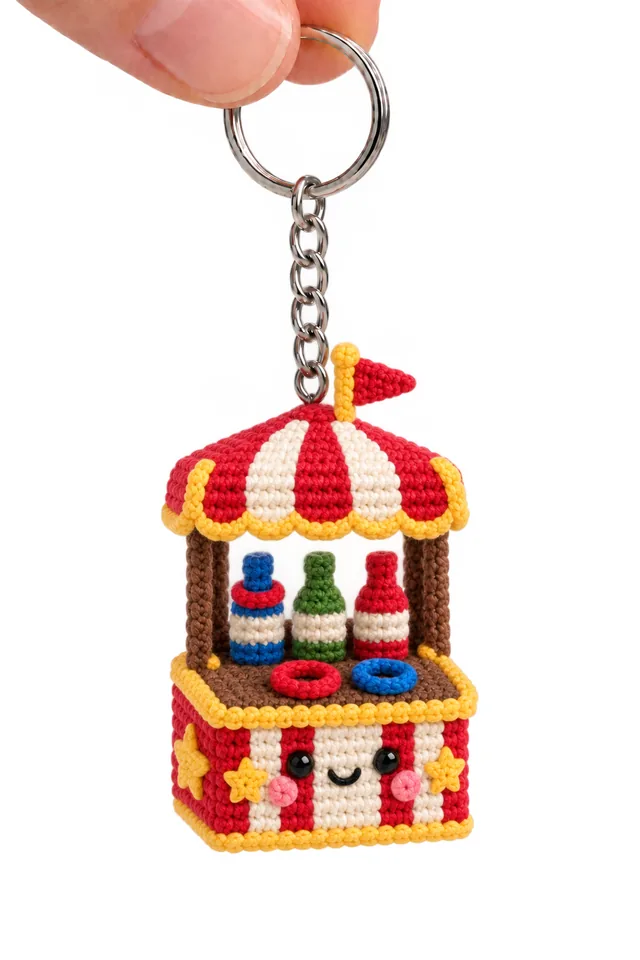
The ring toss is the most classic booth of the five. A red-and-white striped canopy on brown posts shelters a counter where two rings – one red, one blue – rest in front of three upright prize bottles in blue, green and red, the booth front smiling with star decorations.
The striped canopy does the fairground work immediately, and the bottles give the piece its fine detail – the tiny colored caps reward a close look. The smiling booth face turns the game into a character.
For a mood board, the ring toss shows the counter-plus-prize structure common to all carnival booths: a horizontal display surface lets a maker arrange several micro-objects instead of one.
Against the whack-a-mole, the ring toss is a game of skill displayed calmly while the mole game is all action. Two carnival moods. The image is an AI-generated concept, inspiration only.
A duck-pond carousel ride
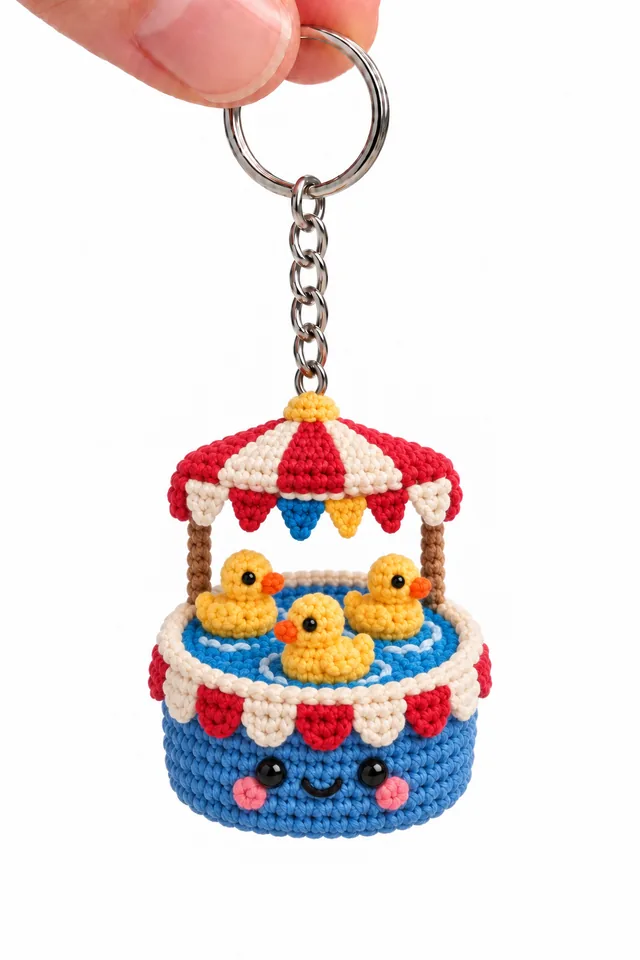
The duck pond is the most charming ride of the five. A blue basin with a smiling face and white scalloped trim holds three tiny yellow ducks under a red-and-white striped umbrella canopy with hanging pennant flags.
The piece compresses an entire ride into one object: basin, passengers and canopy. The three ducks at slightly different angles suggest rotation, and the pennants add a vertical flourish that echoes real ride umbrellas.
For a mood board, the duck pond demonstrates ride-as-container: any revolving attraction can be miniaturized as a round base plus a top structure plus tiny passengers – teacups, horses, cars.
Compared with the static ring toss, the duck pond implies spinning motion. Together they show how a single composition trick – pennants, angled passengers – suggests movement in a still piece. The image is an AI-generated concept for inspiration, not a finished piece.
A balloon-dart game stall
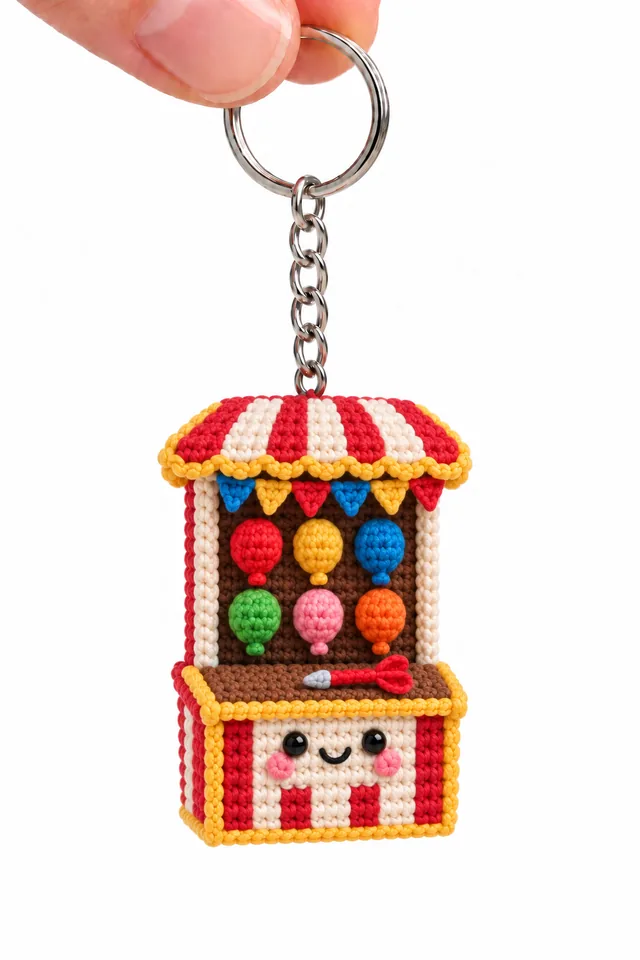
The balloon-dart stall is the most colorful of the five. A red-and-white striped awning with scalloped yellow trim crowns a booth whose back wall is a grid of plump balloons in red, yellow, blue, green and pink, with a single tiny dart resting on the brown counter.
The balloon grid is the design's engine: nine bright spheres give more color per square inch than any other element in the set. The lone dart tells the game's story in one prop.
For a mood board, the stall shows the value of a repeated micro-element: one balloon is cute, but a wall of balloons is spectacular. Repetition of a simple shape is the fastest way to build carnival richness.
Against the duck pond's three passengers, the balloon wall uses nine identical objects to opposite effect – variety of pose versus variety of color. The image is an AI-generated concept, inspiration only.
A whack-a-mole game case
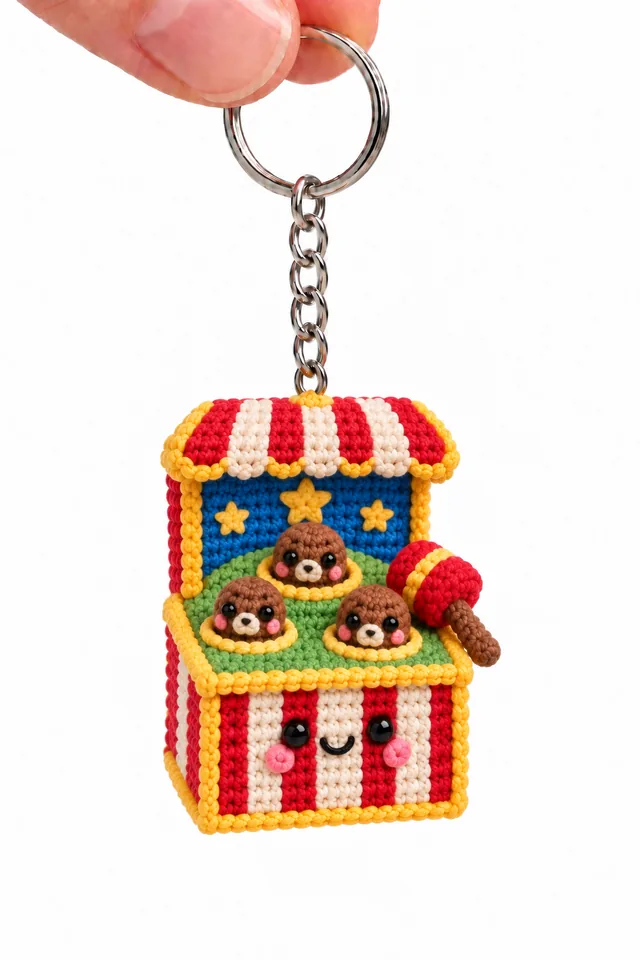
The whack-a-mole is the most animated of the five. A red-and-white striped game case with a blue starry back panel pops three brown moles at different heights from round holes, a red mallet resting at the side of the green playfield, the case front smiling up at the player.
The staggered mole heights are the motion: three identical heads at three levels read as a sequence, like frames of an animation. The mallet supplies the player's role, completing the interaction story.
For a mood board, the whack-a-mole demonstrates the sequence trick – repeating one figure at progressive stages to imply action, useful for any game or motion scene.
Compared with the calm ring toss display, the mole game is mid-play chaos in the best way. The pair shows fairground booths before and during the game. The image is an AI-generated concept for inspiration only.
A smiling monorail on its track
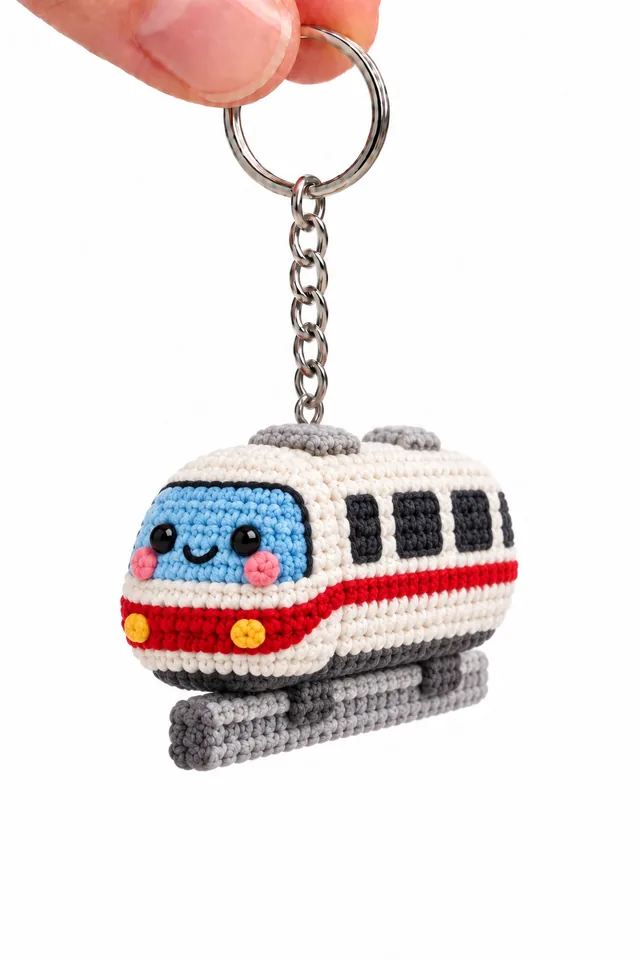
The monorail is the most modern piece of the five. A rounded train with a blue smiling front, dark oval windows, a red stripe along its white body and small yellow lights sits astride a gray monorail track, the whole vehicle hanging from a key ring as if suspended mid-ride.
The track inclusion elevates the piece from vehicle to scene: without it, the train is just a transport charm; with it, the monorail is doing its one job. The friendly face on the front makes the machine a character, storybook-vehicle style.
For a mood board, the monorail shows infrastructure-as-context – rails, tracks, roads and piers give vehicles their meaning and only cost a few extra stitches of gray.
Against the old-fashioned striped booths, the monorail represents the modern fairground, completing the set's journey from classic carnival to contemporary park. The image is an AI-generated concept, inspiration only.
The whole fairground, palm-size
The five pieces cover a full day at the fair: a game of ring toss, a ride on the duck pond, a dart throw, a round of whack-a-mole and the monorail home. Each scene is built from the same components – a striped structure, a smiling face, a handful of micro-props – rearranged to tell a new story.
When designing fairground miniatures, start with the striped canopy: it is the strongest fairground signal there is, and everything else – prizes, passengers, moles – can be as simple as the scale demands.
All five images are AI-generated concept illustrations. They suggest scenes, structures and palettes, but they are not photographs of finished crocheted pieces and contain no patterns or instructions. Use them as a springboard for your own fairground keychain mood board.
Read how we present crochet inspiration or send a suggestion or correction.