A small prop can give an amigurumi character an entire setting. In this collection, a pink flower becomes a seat, a blueberry hood becomes a costume and a blue mug becomes a winter hideaway. All five concepts share a rounded, plush-looking surface, but each uses a different relationship between the animal and the things around it.
These images are useful for comparing visual choices: where the face sits, which color attracts attention first and whether the accessory frames the character or dominates it. Their hand-held presentation suggests a miniature aesthetic, not a verified physical size. The soft-looking surface is also a visual impression; the images do not establish a particular yarn, feel or construction method.
A rust-colored fox tucked into a pink flower
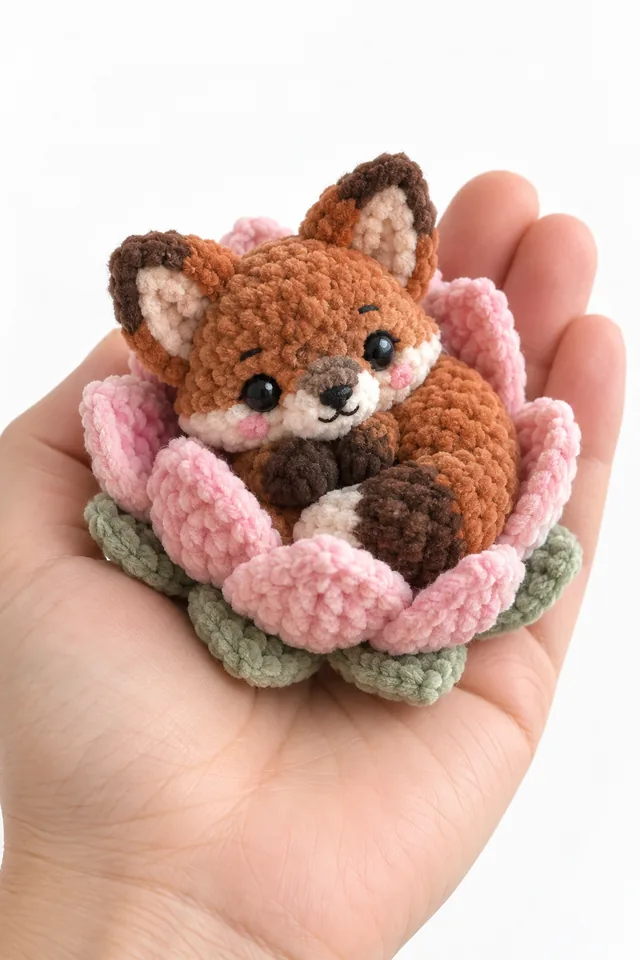
The fox is wrapped in its setting. Tall pink petals rise beside the body, while lower petals curve across the front like a shallow bowl. Muted green leaves form a base beneath them. The animal’s pointed ears stand above that rounded enclosure, keeping the silhouette recognizably fox-like even though much of the lower body is nestled inside the flower.
Warm rust and brown give the character more weight than the pastel petals. Cream areas on the ears and muzzle lighten the face, and small pink cheeks repeat the flower color. That repetition makes the animal and the flower feel connected. The dark nose and eyes remain small but distinct against the lighter face, rather than competing with a very busy background.
For an inspiration board, this idea offers a clear contrast between a pointed character outline and a soft surrounding shape. A pale peach flower could make the palette more tonal; a cooler pink would emphasize the separation between fox and petals. The strongest feature is the sheltered pose, so any visual variation should leave the ears, face and front paws easy to read.
A raccoon in a blueberry-blue hood
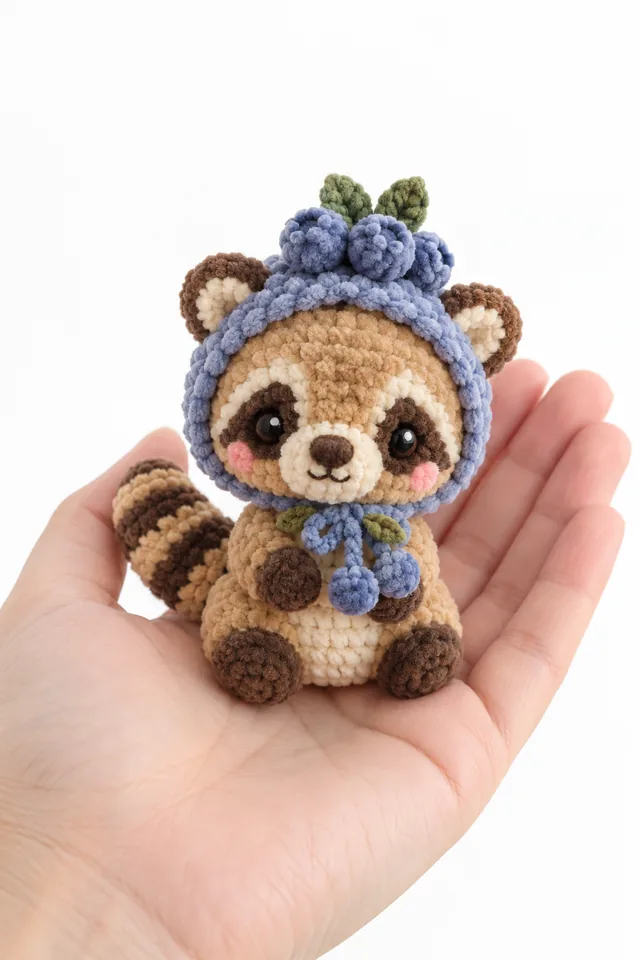
The raccoon’s accessory changes the outline of the head instead of creating a separate setting. A dusty blue hood forms a rounded border around the face, with a cluster of blueberry-like shapes and small green leaves at the top. Two blue ties hang near the chest, drawing that same color down into the center of the figure.
The tan and cream body keeps the blue accent prominent. Brown facial patches and a striped tail identify the raccoon without requiring a strong gray-and-black palette. The tail extends to one side and balances the height of the fruit cluster above. This creates an asymmetric composition: upward interest at the head, sideways interest at the tail, and a relatively simple seated body.
Choose this reference when you want the character to wear the theme. Compared with the fox’s larger flower seat, the hood feels more self-contained. A color study could explore muted indigo or powder blue while retaining the cream face opening. Adding another large prop would change the focus; the existing idea works because the costume supplies most of the visual story.
A black bear holding a golden honey jar
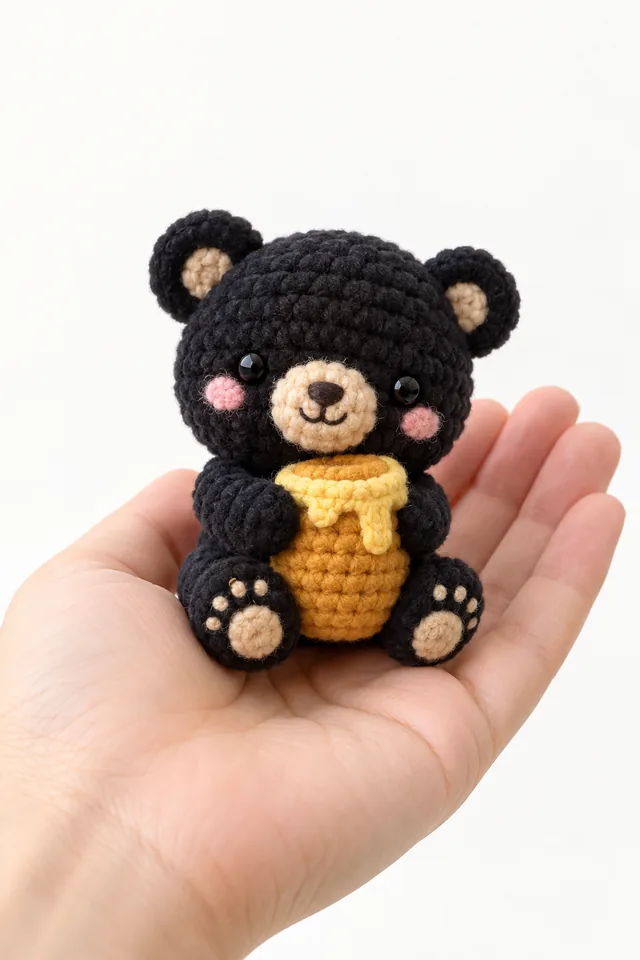
The bear has the boldest light-and-dark contrast in this collection. A black rounded body surrounds a golden jar held directly in front, while a cream muzzle and pale paw pads add smaller islands of brightness. The jar sits between the arms, giving the otherwise straightforward seated pose a clear central action.
The golden shapes around the rim suggest dripping honey. Their uneven edge breaks up the repeated round forms of the head, ears and paws. Pink cheeks soften the dark face without becoming the main accent. Because the body is so dark, the cream muzzle does more of the expressive work than the eyes; it gives the small smile space to remain visible.
This is a useful reference for a limited palette with one strong focal color. The honey jar would become less prominent if several other accessories used the same bright yellow. Keep that concentrated contrast in mind when comparing mood-board variations. The image suggests sweetness through shape and color, but it does not show a functional container or establish anything about a real object’s materials.
A snow leopard peeking from a winter-blue mug
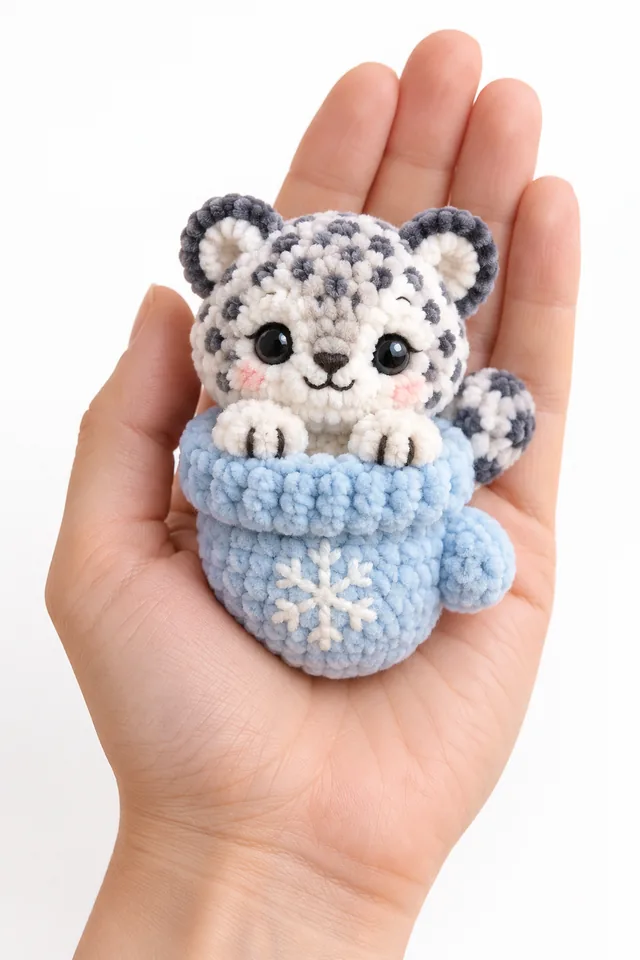
The snow leopard uses a raised edge as part of its pose. Two front paws rest over the rim of a pale blue mug, and the head rises immediately behind them. That arrangement draws the eye from the snowflake on the front of the mug to the paws and then to the face. The handle adds an unmistakable cup silhouette on one side.
White and gray spots make the animal more patterned than the other characters. The broad blue area below provides a calmer counterweight, keeping the composition from feeling busy everywhere. Dark ear edges frame the upper corners of the face, while rosy cheeks provide a small warm accent within the winter palette. The snowflake reinforces the seasonal mood without needing another separate prop.
Use this direction for a cozy winter scene where the character appears partly hidden. Unlike the bear, which holds its jar, the leopard seems to occupy the mug. That distinction changes the sense of scale and storytelling. A cream or muted mint mug could shift the palette, but enough contrast should remain between the paws and rim to preserve the peeking gesture.
A little deer resting among autumn leaves
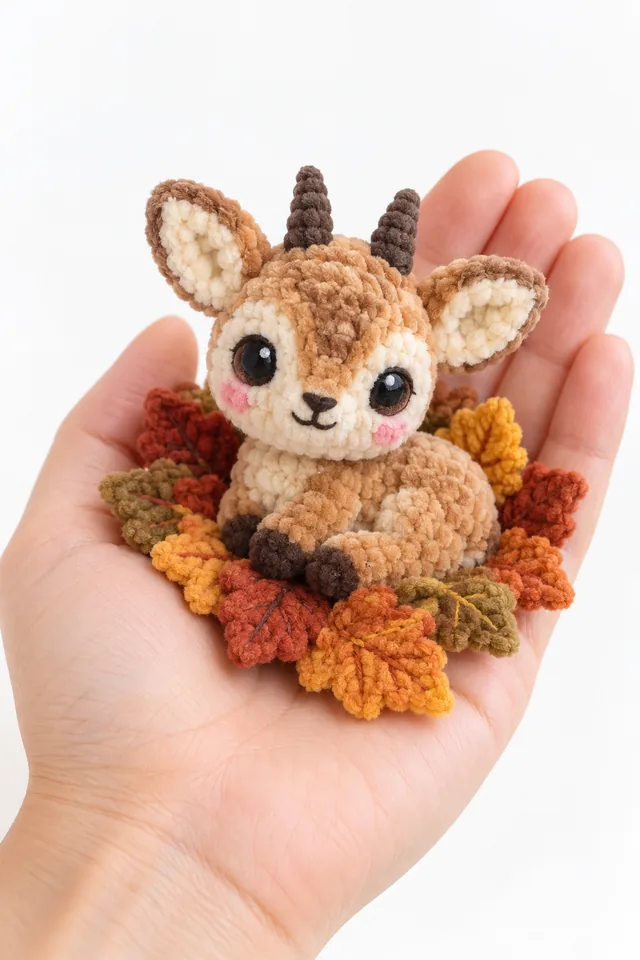
The deer sits within a low ring of leaves rather than a tall enclosure. Orange, golden yellow and rust shapes spread around the feet, leaving the chest and face unobstructed. Large ears extend outward above the head, while two short dark antler-like shapes add vertical accents. The result feels open and balanced despite the many small elements at the base.
The tan body belongs naturally with the autumn colors, so the cream face and chest are important for separation. Dark hooves repeat the darker head details and help define the seated pose against the leaves. The foliage varies in color and outline, producing a more irregular border than the fox’s pink flower. Both concepts frame an animal, but their surrounding shapes create different moods.
This reference suits an autumn woodland mood board with warm, closely related colors. Keeping some leaves brighter than the body helps the base read clearly without covering the animal. For a quieter version, imagine fewer colors in the foliage while retaining its varied shapes. The useful idea is the low seasonal frame, not a need to reproduce every leaf or surface detail from the illustration.
Compare the setting as well as the animal
For a character framed by its surroundings, compare the fox and the deer. Both sit inside a colored border, but pink petals make the fox feel sheltered while the rust-and-gold leaves make the deer feel seasonal. The fox has a taller enclosure; the deer keeps its frame low and open.
The raccoon, bear and snow leopard each use one prop differently. A hood reshapes the raccoon’s head; a honey jar gives the bear something to hold; a mug hides part of the leopard and creates a place to peek from. Choose the relationship that suits your mood board before collecting more decorative details.
A useful visual selection can be built around one repeated feature, such as cream facial accents or rounded cheeks, while allowing each setting to change. Leave enough contrast around eyes and mouths to keep expressions clear. Treat the collection as a set of color, shape and storytelling references, rather than instructions or evidence that an identical crochet object can be made.
Read how we present crochet inspiration or send a suggestion or correction.